Madeleine Corley is a poet by internal monologue
who writes songs about her roommate’s dog. Her work has been featured in
Anti-Heroin Chic, Moonchild Magazine, DARK MARROW, The Elixir, and more. She
serves as the Poetry Co-Editor for Barren Magazine. She lives in Dublin,
Ireland, and adores public transit. You can find her at her website, wrotemadeleine.com, and
on Twitter @madelinksi.
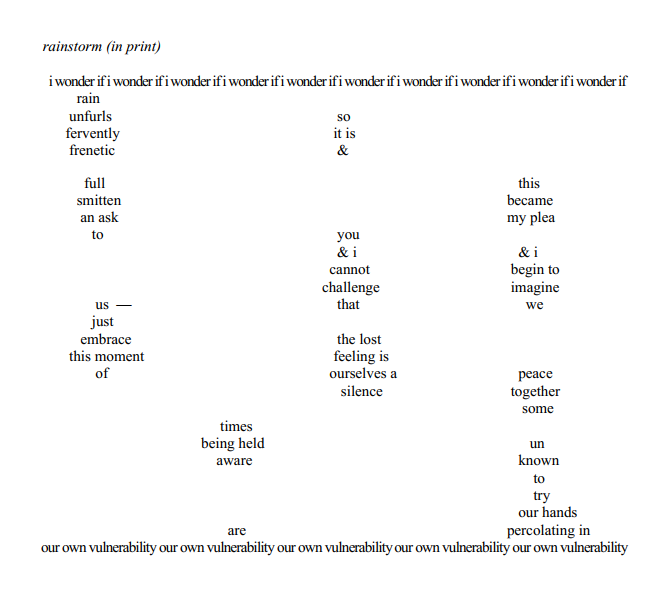
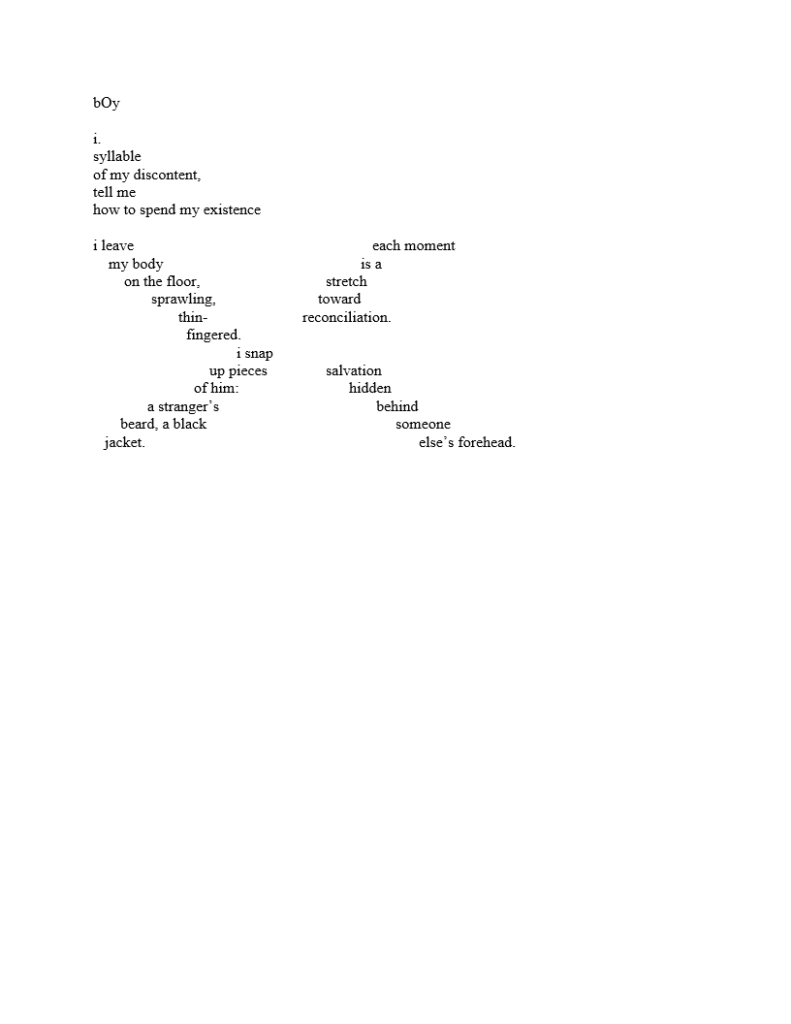
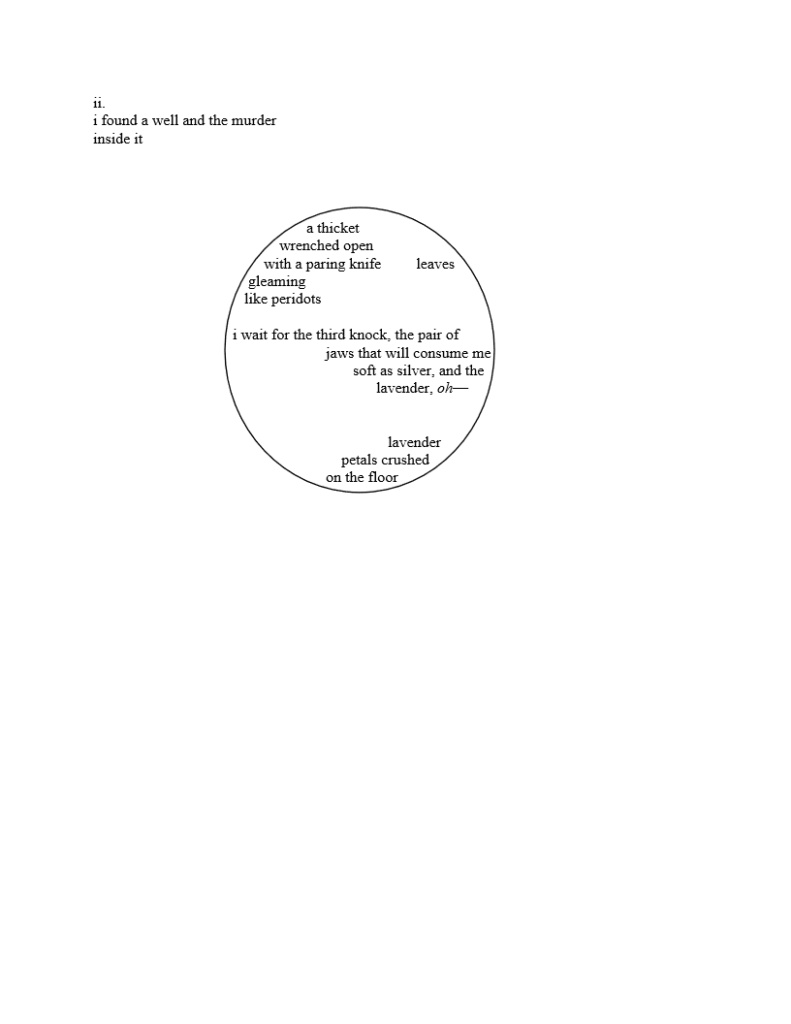
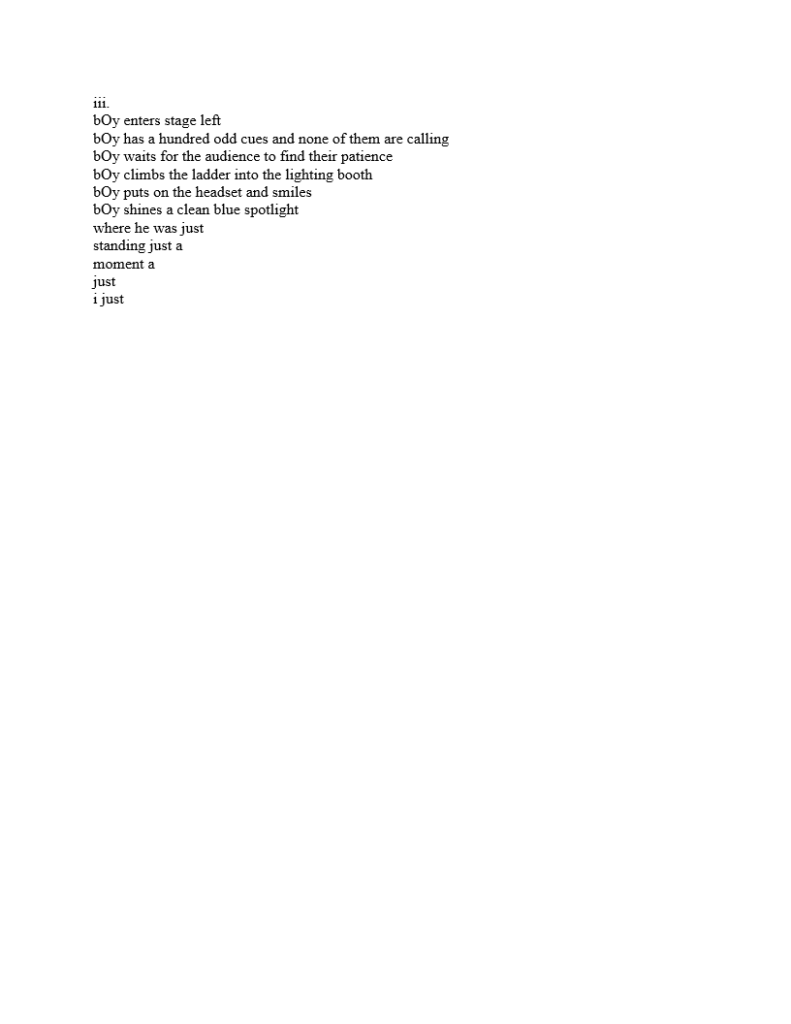
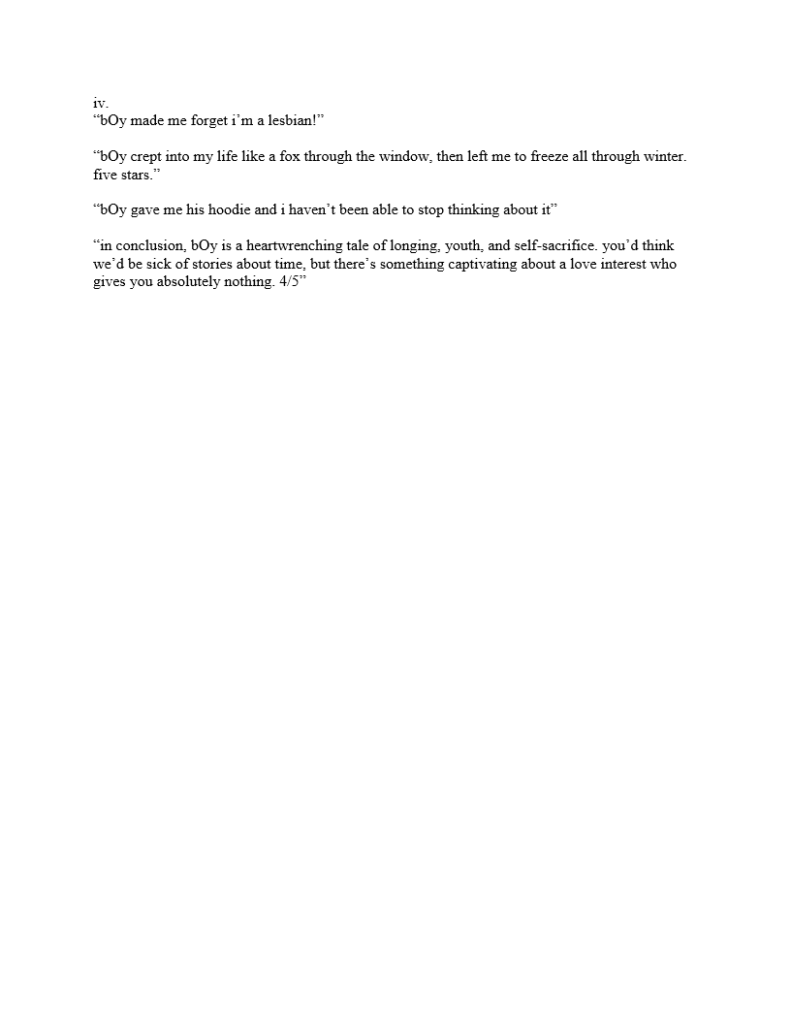
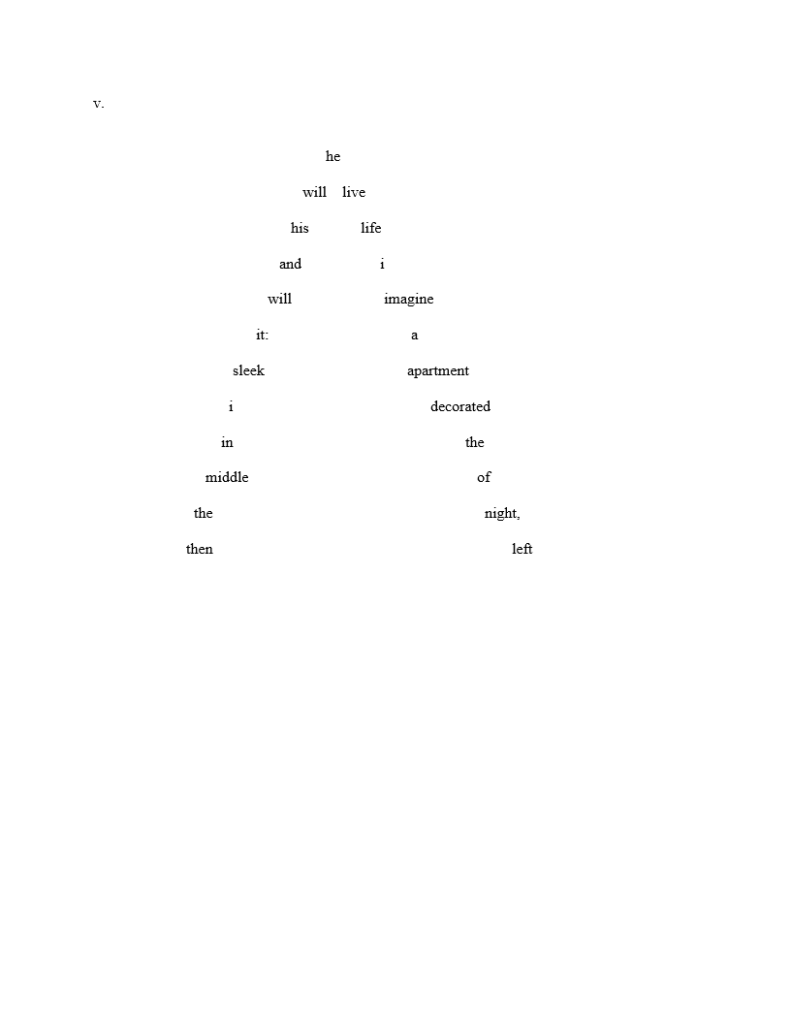
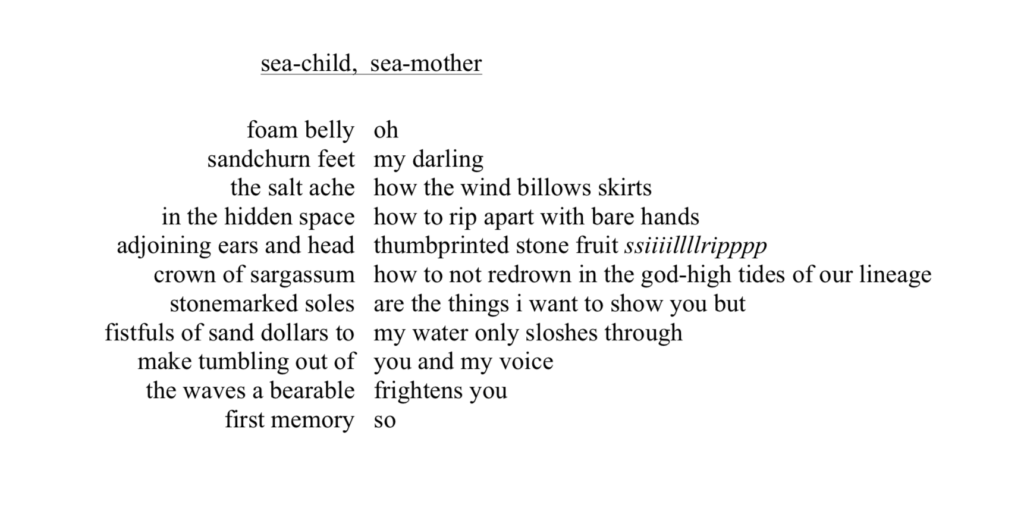
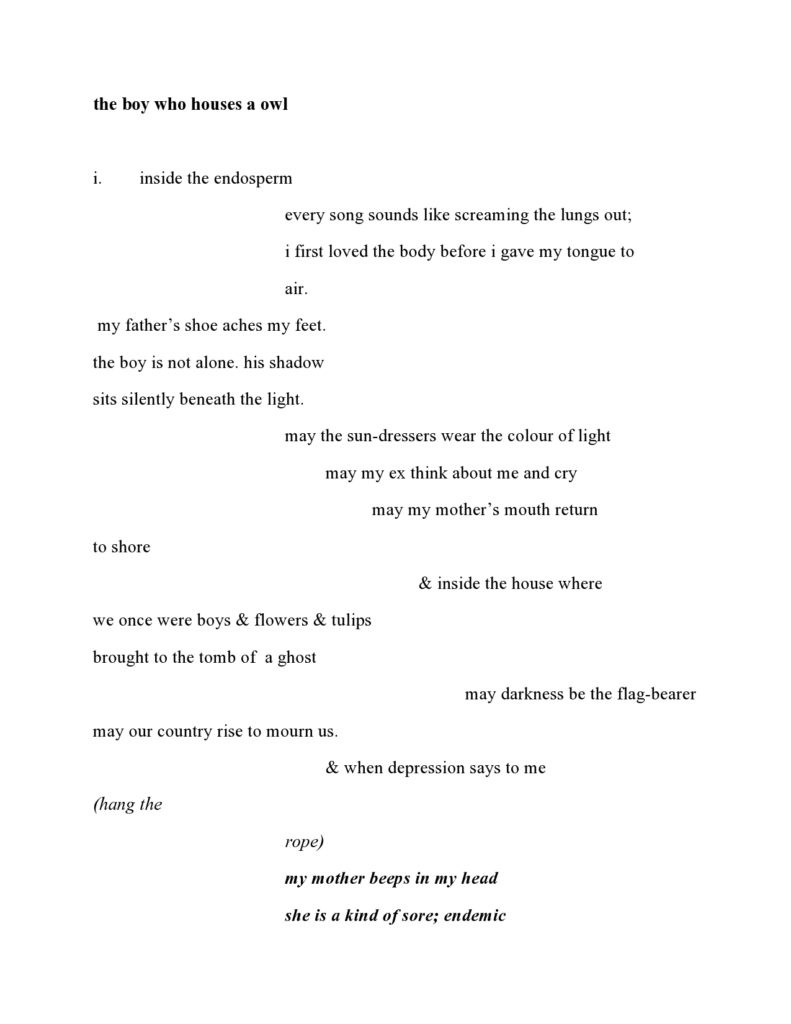
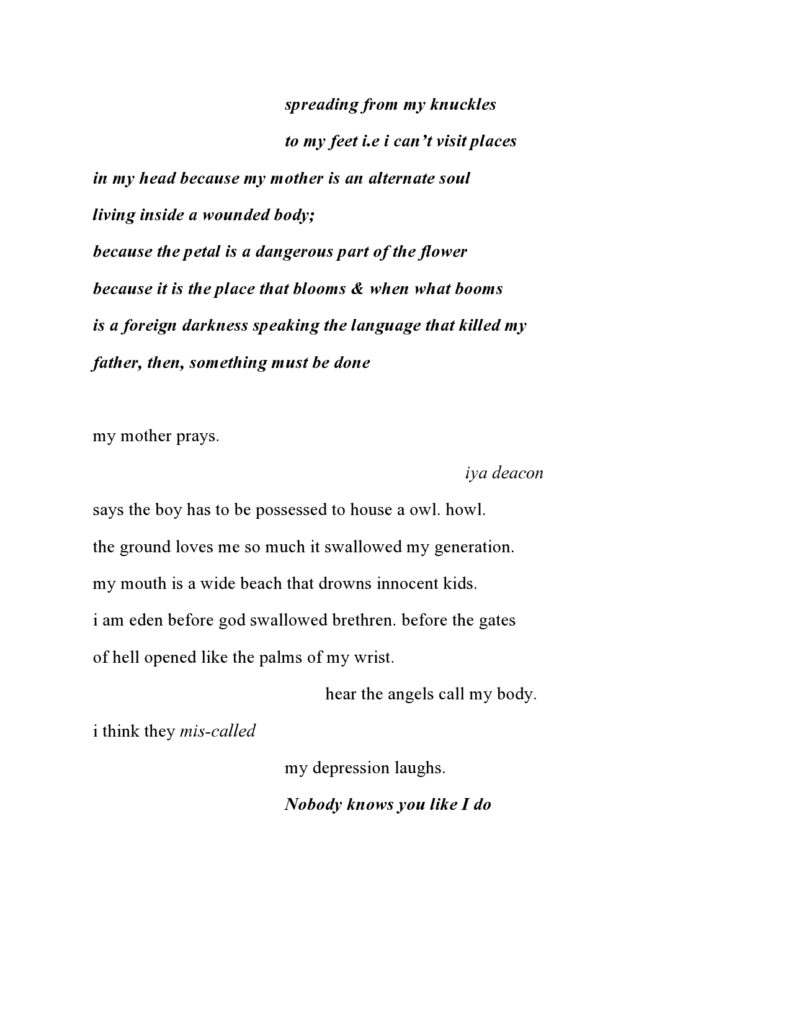
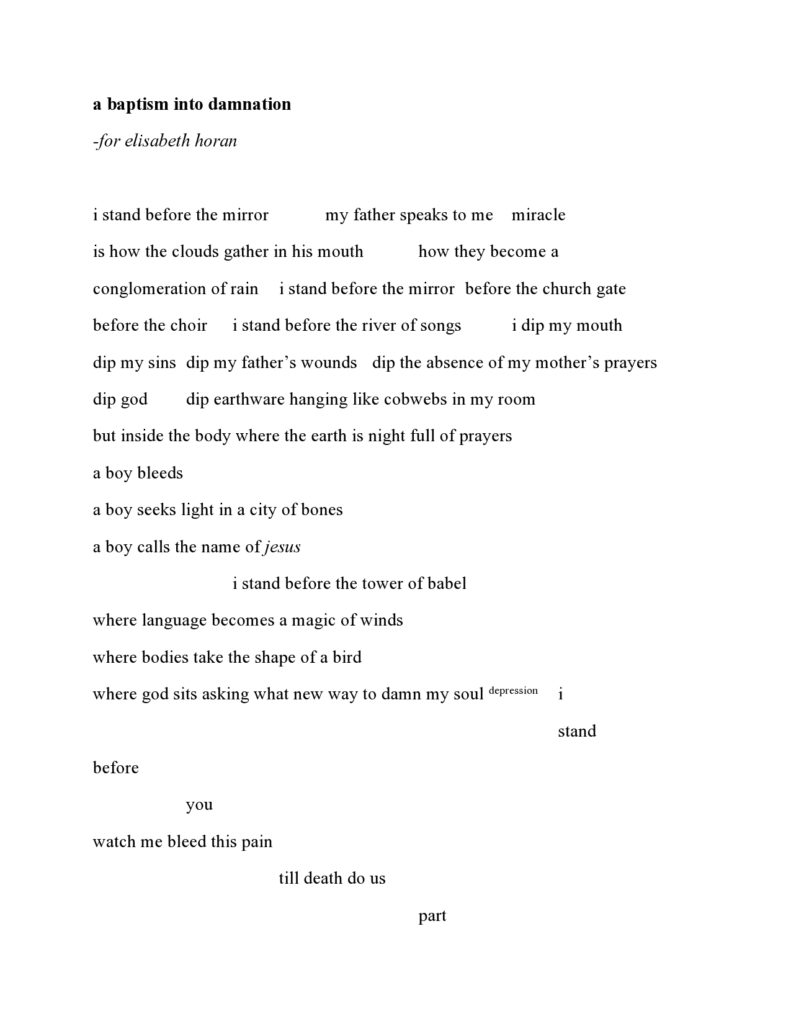
I appreciate both the content and the unusual format of this poem. I also appreciate the willingness of the publisher to make sure that a hybrid form could work in the interface so that we readers can have the pleasure of reading the work. That is a kind of access that other online sites do not offer.
Ethan J. Murray is a queer, autistic poet loved into existence by 12 headmates. Their work is forthcoming or published in Occulum Journal, Sidereal Magazine, and Homology Lit. They also post free interactive fiction about trans kids learning magic at softpoet.itch.io. You can find them on Twitter, Patreon, and Ko-fi @ethanandco.
She walks along the yellow line, back and forth, back and forth. Every so often, she stops – looks out into the endless black. Brakes hiss, headlamps in her eyes; she steps into the light.
Kayleigh Campbell is a Creative Writing PhD Researcher at The University of Huddersfield and an Editorial Assistant for Stand Magazine. She has been published in print and online, including Eye Flash Poetry and Indigo Dreams.
The fleeting given, you are grateful for the brevity as much as the bestowal, the sage advice, the marrow, the clawed out eyes of your anxiety— if our outsides matched our insides, everyone would scream and run away— a tiny wish stays hidden, penitent remains, let us be as divided as a wishbone, picked clean by scavengers. I’ve lost the plot. You empathize the homeless woman hiding her trove under a butterfly bush in the parking lot of your corporate office, still you turn away, or so your privilege won’t hurt her pride, or vice versa. Our eyes take in what our brains can’t process for our mouths to say. Why don’t we do anything of substance? We have always hated mirrors for reflecting our flaws.
V.C. Myers work appears, or is forthcoming, in Poet Lore, Prairie Schooner, The Minnesota Review, Tar River Poetry, Spillway, Queen Mob’s Teahouse, Entropy, and elsewhere. She has lived in Ireland, England, and West Virginia.
when you push feather- hard at dawn, light falls fast through the estuary. what now? the carp swallows it, grows hundred-fold then explodes in regret
wading herons burn their legs, become weight less. the orb rolls onto the banks, a gentle flame in its wake, the hill crumples inwards from gravity, eggshell tapped by an all-consuming spoon. what must the sun feel, to be trapped by its own efficacy. now we shudder in the void, without light there are no things, there is no shadow pretend it’s not real & say, i am ready, i come from the dark
always, forget the past and our shining eyes. cast off the pearls, they are useless now but for plugging up holes, nose and fissures. hear that cry amid exploding reeds and prostrate yourselves in worship, it wants to be
born.
sea-child, sea-mother
Hal Y. Zhang is an international transplant to the United States currently studying time and networks. In her spare time, she writes at halyzhang.com.
There is death in your mouth, the words run you over on its way out The hurt leans closer, firmly establishing a name in your body. You handle hope wrongly, your life is a sunken city. You could be Atlantis: city of loss with all of the shine flooded, the water swallows your soul, loves you like a deserted island, loves your body like a war, anoints your head with grief. sadness crawls like the stretch of your face, learns the back roads to your emotions, smells your gloominess, you’re the height of autumn, you remain grief kissed, pain burned. Your voice is a dead shadow, too cracked to hug the wall. You go out in the sun, display the length of your hurt, let in the light of a lover, break your own heart, solidify your pain. You know your body as a hole, gigantic void bearing a boy’s broken life, shards of loss in glass left untouched by God.
Boy Echo
boy is single boy is a no-name town he kisses death welcome or desolation boy is allergic to sunlight boy wears darkness on a starry night boy is dewy eyed happiness is a fuel emptied out & so he dates a cigarette rolls up a miracle comfort dressed in smoke boy calls out frustration aloneness too & sadness he mourns their roasting flesh smell of worlds burning worlds boy has been cursed to tour boy is a mixed feeling warm with love cold with unmatched silence boy does continue like life on stormy nights he visits depression understands the language of a life torn apart boy sails on smoke bursts into light & takes up the role of an echo boy is louder now a ghost town capable of silence
Editor’s Note: boy echo was previously published in Barren Magazine.
Michael Akuchie is a Nigerian—based poet whose works have appeared on Barren Magazine, Euonia Review, Kalahari Review, African Writer and other literary spaces.
Adedayo Agarau is a student and poet hoping to make the world a little better with his words and photography. He has works up at Barren Magazine, Geometry and 8poems. His first manuscript “Asylum Chapel” is coming to light for publication looking for a good home. Please connect with him on Twitter @adedayoagarau and on Instagram @wallsofibadan, where he documents the beauty and pain of his Nigerian city home.
The debut issue, Gold in the Soil, explores themes of grief, identity, culture, race, mortality, and family. Yet, out of the darkness, truth prevails. Gold in the Soil is a testament of survival and loss. It is an honest and at times gut wrenching depiction of emotion. The range of expression represented in Gold in the Soil transports readers to new heights and depths. Despite the obstacles, struggles, and barriers that characterize many of the written works, hope remains.
The curated playlist, Gold in the Soil mirrors many of the themes presented in the online issue.
Featured musical artists include: Sjowgren, Kississippi, Wolf Alice, Santigold, Charly Bliss, Charades, Jay Som, and Laville.
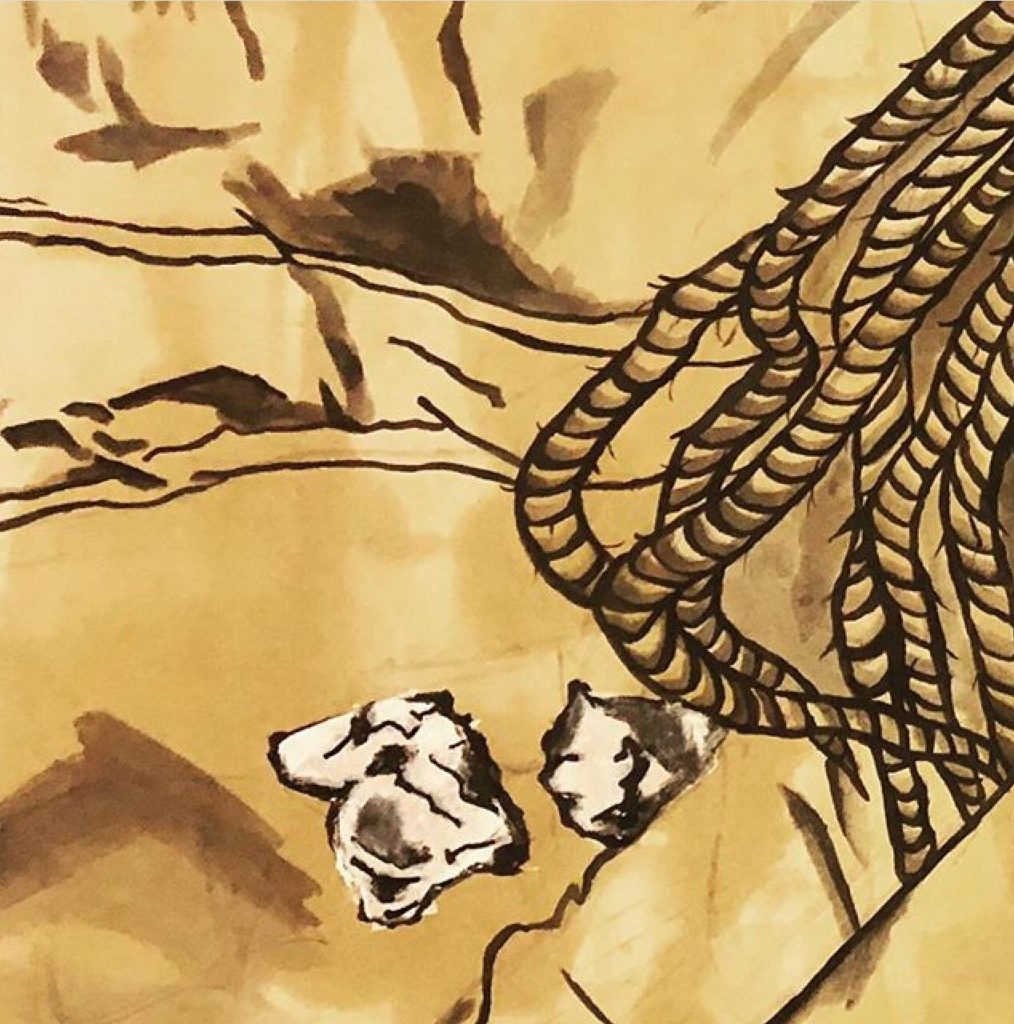
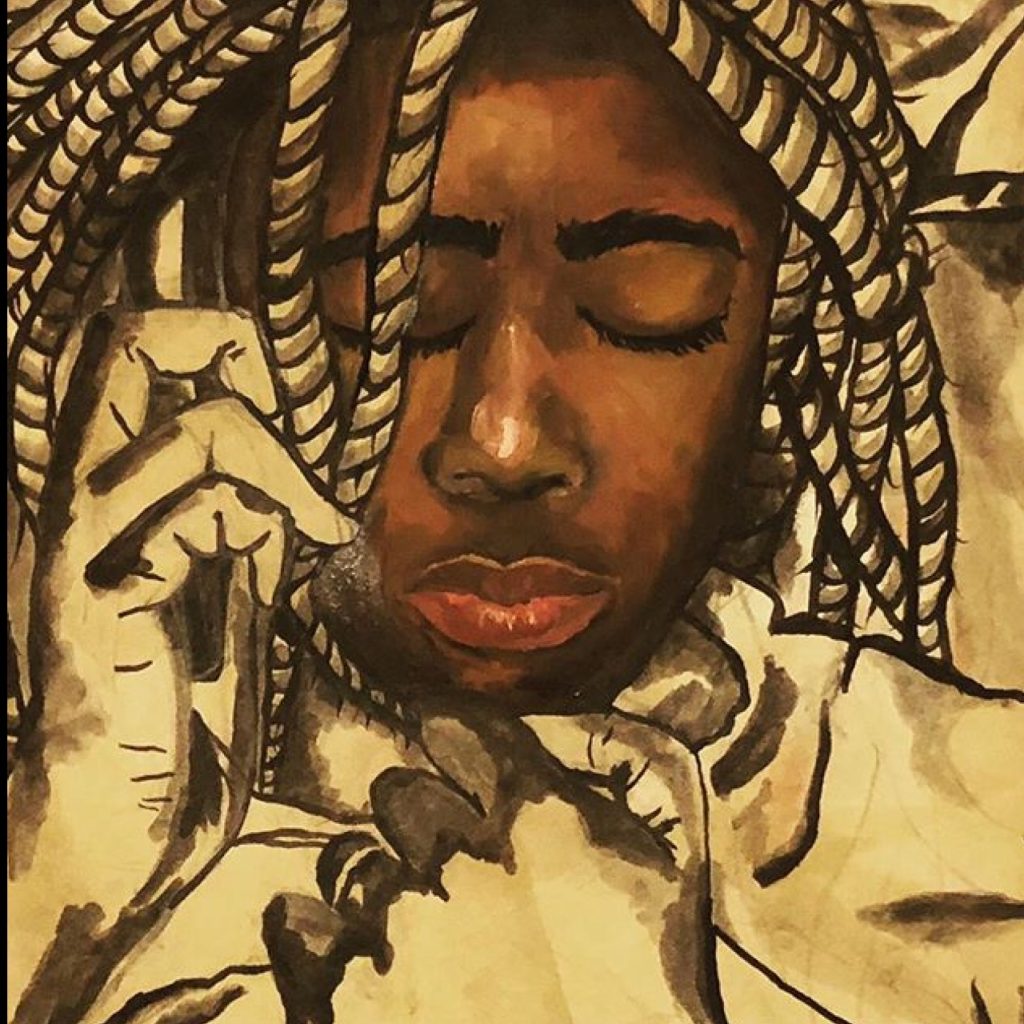
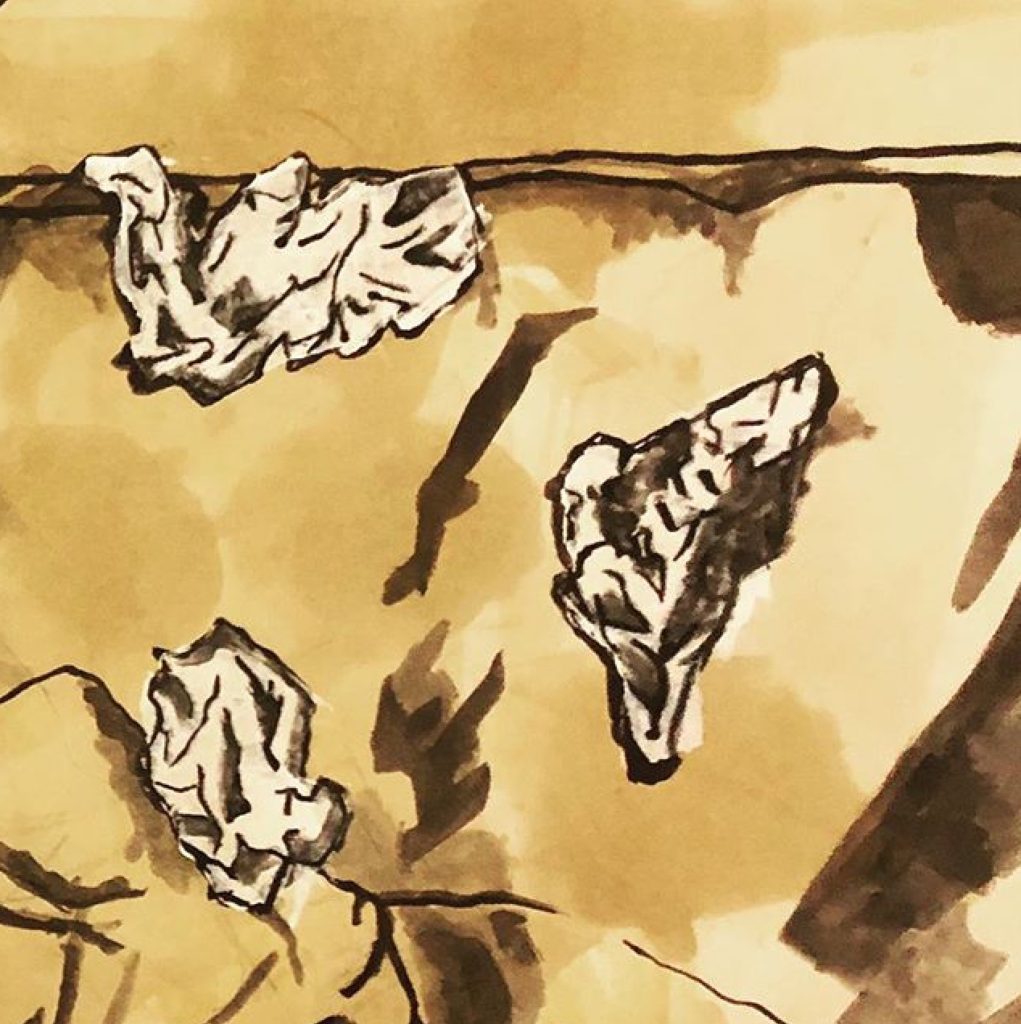
De’Anne Crooks, artist-educator, is on the rise. Her artwork captures pressing issues within society by reminding audiences of the intersections between mental health and identity. Deep brush strokes characterize magnetic portraits of loss, pain, love, and resilience- beaming with a message of transformation to ultimately reclaim truth.
De’Anne Crooks uses the canvas to reignite hope, challenge misconceptions, and uplift Black narratives through an unapologetic lens within the forthcoming exhibition:
Two Truths and a Lie
Would you mind telling The Hellebore audience about Two Truths and a Lie?
Two Truths and a Lie (TTAAL) is so precious to me, I think that is because it will be my first solo exhibition, but I think it is more about how relevant the narrative is. TTAAL is an artistic and educational project about race, mental health and identity. It encompasses facts about black British history, misconceptions regarding mental health and discovering your identity with confidence; in visual form. TTAAL uses an exhibition platform and a series of workshops to engage the community in a conversation that highlights the truth about identity, the truth about well-being and how lies can hinder self-preservation. I will exhibit some dynamic artwork, in which I have learned so much from by simply creating them and my TTAAL team and I will also deliver a series of illustrative and visual art workshops that explore the ways in which art can work as a therapeutic and reformative tool towards greater understanding within society. The project takes place in an inner-city industrial gallery space for two weeks in July 2019 to allow for a wider reach amongst young people who, at this stage, would be on summer break.
Why is it important to have conversations about mental health? Particularly in the Black community?
There are disagreements about the correlation between poor mental health and race but when you look closer at intersectionality you begin to find alarming links
between socio-economic status, wealth, genetics and mental health. I think there are two reasons why conversing about mental health particularly relating to the black community is important. As a society, if we ignore the patterns amongst black people suffering with poor mental health then we are denying a large group of people the help that they desperately need. But intrinsically speaking, we as a black community can be very harmful to the development of mental health support. I say this because, culturally, we have only recently begun to acknowledge mental health difficulties as a real issue- this has set us back considerably and has allowed mental health conditions to develop without intervention due to the stigma and ignorance. Whether we are starting the conversation or simply joining in, talking about mental health educates us on the facts about some very real and pervasive health conditions affecting black people. It is very easy to label and dismiss ‘that’ uncle or distant cousin who acts strangely at family functions, but have you ever considered that they could be suffering from a psychosis-related health disorder or dealing with BPD, depression or mania? I think we as a community have to treat mental health just as we treat physical health because, ultimately, they are both mightily important.
What is your motivation for creating art that responds to pressing issues within society?
When I was 11 years old, one of my high school teachers commented on the power, or the lack thereof, within my voice. He said that I had “somewhat of a background voice”. At the time, I did not realize how damming this comment was. It was only as I stumbled into adulthood I realized that this comment had deeply anchored itself into my self-esteem and caused me to feel ignored in every area of my life. Subsequently, in attempt to have my voice heard, I ended up in a teaching career whereby my voice being heard is a core part of my job. This comment silenced me initially but not permanently. When I encounter societal issues such as systematic racism, negative stigmatization of mental health and the ever-growing exploitation of a generation’s search for their identity, I ache to address these issues. The desire to do something about it, start or engage in a conversation about such things is immense. I still struggle with the notion that people may not always be listening to what I say; it’s this insecurity that motivates me to create. People can ignore what I say but they find it harder to ignore the art that I create. I create art about these issues because art transcends socio-cultural boundaries and penetrates the mind and heart. Art forces its way past accent, tone, vocabulary and causes you to look up from your phone. Art is my way of having a much-needed conversation about real pressing issues.
How can artists use their platform to empower and re-energize the masses?
Empowering and re-energizing those around us is a duty given to all artists. As artists we have been given a talent and being selfless with this talent is sort of an unspoken code of conduct amongst creatives. We have one of the most profound opportunities to communicate with a mass of people and I think that we should find a balance between creating art for our own expression and using art to speak, challenge, inspire and educate. Artists are lucky because we have a plethora of ways in which we can use our gift to empower and re-energize. Personally, I suggest beginning with who you are and by that, I mean, addressing an issue that affects you or somebody you know. We may not be well-versed in every area of life, but we can begin by speaking on the things that affect us. I use my platform to empower other young people, other black people, other women, other disabled people, I do this because I have a basic understanding of these sociological groups. But our responsibility does not stop there. I began with who I am but then began to research mental health and empower and educate others about a topic that I didn’t immediately identify with. I like the words empower and re-energize because, if I am completely being honest, if my work does neither of these things then I may as well find another passion.
What perspectives are missing from the media? How can the art industry embrace inclusion and equity to fill that void?
I think an unbiased, diverse, socially educated cohort of people are missing from the media universally and this is significantly affecting perspectives. The media are supposed to present news, but information is not always factual or/and supported by valid arguments and, as of late, it has resulted in ‘fake news’ and ‘alternative facts’. We have been conditioned to trust what the media present to us, but recently this has become more confusing because in most cases the media’s perspective is blurred by bias. I think that the art industry has a huge role to play in media reform because much of how information is presented is done so through artistic form. When we think of art as a form of communication we make the mistake of thinking only of the performance arts or visual arts but in terms of the media, we should be focusing on producers, editors, photographers, graphic designers, web designers and advertisers. These are the artists in powerful positions, artists who can make a significant difference within the media. Whilst they may not consider themselves artists or identify with the art industry, they cannot deny that they are creatives and creatives working within the media are pertinent in embracing inclusion and equality.
Describe the importance of the arts in education. How can the public continue to advocate for arts programs?
I believe that arts in education should be considered as paramount as English, Mathematics and Languages. There are many points in life where we are challenged with trauma and discord, we are taught how to apply multiplication to our grocery shop but not encouraged how to apply the ability to express ourselves creatively in stressful scenarios. Art as a therapeutic tool alone is the answer to many societal issues we face today and, in most cases, if people were encouraged to develop an artistic outlet they may even begin to discover their identity. We place art at the bottom of the educational hierarchy of subjects but demand so much of art within society. We, as a public, expect innovative music, fashion, tv shows, films, adverts, packaging and websites but I don’t think that the government invest enough in these areas within school. Simply recognizing these roles as pivotal and respected careers would be a great way to increase advocacy for arts programs.
Where do you draw inspiration?
Like most artists, I am inspired by life; good, evil, love, pain, time, loss, identity and in some cases, religion. These topics affect and inspire me in different ways but in order for me to feel inspired enough to narrate, the topic needs to move me intimately and fervently. How I discuss these life-topics is often inspired by other renowned artists. Artists such as Harmonia Rosales, Kehinde Wiley, Lubaina Himid, Amy Sherald, Titus Kaphar and Jean Michel-Basqiuat use fine art as a conversational tool; changing perspectives and narratives everywhere. I aspire to use my perspective, coupled with my artistic abilities, to produce influential pieces of art.
Most recently, I have discovered that my emotions inspire my work in a perplexing way. Whilst I consider myself to be an emotionally intelligent person, which can sometimes be mistaken for solely having the ability to understand and articulate my own emotions as well as the emotions of others, I have actually found myself becoming consumed by my own emotions. Rather than wrestling with this overwhelming abundance of feelings, I chose to surrender to them and let my hands create something in that very moment; this has proven successful as you will be able to see in my upcoming works.
How do you practice self care as an artist? What advice do you have for other professionals, students, artists, and educators in the field who may face challenges and obstacles in the industry?
As an artist, I consider the practice of self-care naturally accessible. Painting, drawing, sculpting and designing are naturally therapeutic activities, however, when I have been commissioned to create a piece of art and the deadline is fast approaching then being an artist can become stressful. In a case like this art is no longer my release and so I turn to talking to my best friend or sister, meditating, listening to music, reading and exercising.
I am still finding my own way in the art industry, so I feel quite humbled to answer this question. My advice would be, particularly for the aspiring artist-educators, to never compromise on your concepts, do not be pretentious about feedback and criticism and share your enthusiasm for art with your students; your passion is more infectious than you know. In terms of being an artist, the most important thing that helped me to overcome obstacles in the profession was to remind myself of my own definition of success. It is so tempting to compare the artwork that you produce to the work of others, but this isn’t healthy, and you will gain more from being inspired by others than coveting their success. Committing to a particular style, technique or topic can be advantageous when first establishing your profile but you do not owe it to anybody to box yourself in or promise your audience one type of art. Explore, be authentic and be professional at all times and no matter what challenges you face, remember why you create.
De’Anne is a British artist-educator who prides herself on having visual conversations about pertinent issues. At 28 years old, De’Anne is currently working in further education, teaching art and design whilst preparing for her debut solo exhibition. De’Anne’s work often tells the story of identity, love, sorrow and morality. Having such a close relationship with her grandparents, De’Anne is often influenced by her Jamaican heritage and presents herself as an honorary dual citizen who debates the topic of ‘belonging’ in her recent project “Two Truths and a Lie”. With more exhibitions, teaching opportunities and collaborations in her sight, De’Anne’s presence within the art industry will be hard to ignore.
Lynn Melnick is an author and editor that utilizes her platform to call attention to pressing issues within literary, publishing, and academic spaces. Her writing explores gender violence, rape culture, and identity through unrelenting images and depictions of both the internal and external process of pain- to ultimately reveal the survivor within. The elements of rage and hope exist within her poetry to defy expectations and disrupt the silence that is all too often forced upon victims.
As a former executive board member of VIDA, Melnick has strived to promote transparent, honest, equitable, and inclusive literary environments free of abuse and harassment. The resulting efforts have produced the pledge and commitment to:
#SaferLIT
How is the #saferLIT initiative addressing issues within the literary, digital arts, and publishing community?
#saferLIT launched in March of 2018 with an ask of the literary community: Join us in ensuring that all corners of the literary community are as safe as possible. Since our launch, we’ve created a pledge for publishers to take to work towards safety within their communities, and we’ve partnered with CLMP and SPD to get the word out. The Academy of American Poets, and scores of smaller journals, signed on, and, we hope, more people will join us soon.
We are currently planning a #saferLIT expansion for the coming year, so stay tuned!
What other issues are writers and publishers facing within the current toxic climate of sexism, harassment, and abuse? How can writers and publishers use their platform to confront these issues?
Well, harassment and abuse doesn’t happen in a vacuum. That Boston Review refused to allow Junot Díaz to take a leave of absence after abuse allegations came to light is no surprise when you also consider their recent VIDA Count numbers. The Paris Review has had a very spotty record of publishing women and non-binary writers in equal numbers to men, so, again, it was no shock that their editor, Lorin Stein, stepped down last year after it came out that he had been harassing women in the workplace for years.
Writers and publishers can create a culture where abuse and harassment isn’t tolerated, and where victims feel safe enough to come forward. Also, writers and publishers need to create spaces where marginalized voices are not only heard but in positions of authority as editors, executive directors, MFA directors, etc. And spread the word! Everyone can call abuse out when they see it, can call out discrimination and exclusion, can promote marginalized voices across their platforms.
Why is it important to keep writing and publishing inclusive and equitable? How can academic and nonprofit institutions secure the future of literacy for all?
For too long, the white male voice has been the default voice in the literary world, the voice that can speak for all. This is just simply unacceptable. We can’t change the world with such a skewed notion of the experiences of those in it. We need to access to all voices.
I have no particular expertise in literacy, but I can say that when people are introduced to literary voices that mirror their own, it can be life changing. I was teaching poetry to a group of teens at a public housing rec center in Brooklyn and they were very skeptical of me and my poetry thing. But when I had one of them read Nikki Giovanni’s “Ego Tripping” out loud to the group, I could see their eyes light up, I could feel them relax into the poem, open themselves up to it. One of the reasons I edited my anthology, Please Excuse This Poem was to introduce a diversity of voices to teens and young adults and to let them know that poetry is not just written by the long dead white men they’re taught in high school, but by people from a mix of backgrounds and experiences.
How can underrepresented writers, poets, and authors navigate the literary field and furthermore challenge the singular narrative of white, heterosexual men that is popularized within media?
It’s tough to keep at it when you feel like the field is stacked against you. I would say keep writing, submitting, putting your voice out there. Create your own networks and support each other.
But, really, it’s those in positions of power and privilege who should be challenging the status quo. It’s not enough to say, “Yeah, we should be more equal!” Actually do something: question an editorial decision, a mag’s VIDA Count numbers, the lack of inclusivity at your journal, school, organization. Call the bullshit out when you see it. Call it out before it’s a bandwagon to do so. Use your privilege to help those with less. If you burn a few career bridges (oh I’ve burned several!) you’ll be okay, I promise.
What authors, writers, and/or publishers have influenced your writing and work? How have they inspired you to continue to create resources for women in literature?
I was early on influenced by the art and activism of Alice Walker, and I continue to be. Every day I am inspired and buoyed by the people I work with at VIDA, who give of their own writing time to work for the betterment of our community.
What advice would you offer to women and other underrepresented writers who are early in their careers?
Keep writing, keep submitting, find your community of writers and support them and let them support you. You matter. Also, you are not imagining that this thing is stacked against you. It is. We’re working to change that.
Lynn Melnick is the author of the poetry collections Landscape with Sex and Violence and If I Should Say I Have Hope, and the co-editor of Please Excuse This Poem: 100 Poets for the Next Generation. Her poetry has appeared in APR, The New Republic, The New Yorker, The Paris Review, Poetry, and A Public Space, and her essays have appeared in LA Review of Books, Poetry Daily, and the anthology Not That Bad: Dispatches from Rape Culture. A former fellow at the New York Public Library’s Cullman Center for Scholars and Writers, she also teaches poetry at Columbia University and the 92Y, and formerly served on the Executive Board of VIDA: Women in Literary Arts, where she coordinated the #saferLIT initiative. Born in Indianapolis, she grew up in Los Angeles and currently lives in Brooklyn. Find her on Twitter: @LynnMelnick.
Jeanne Blum Lesinski
I appreciate both the content and the unusual format of this poem. I also appreciate the willingness of the publisher to make sure that a hybrid form could work in the interface so that we readers can have the pleasure of reading the work. That is a kind of access that other online sites do not offer.