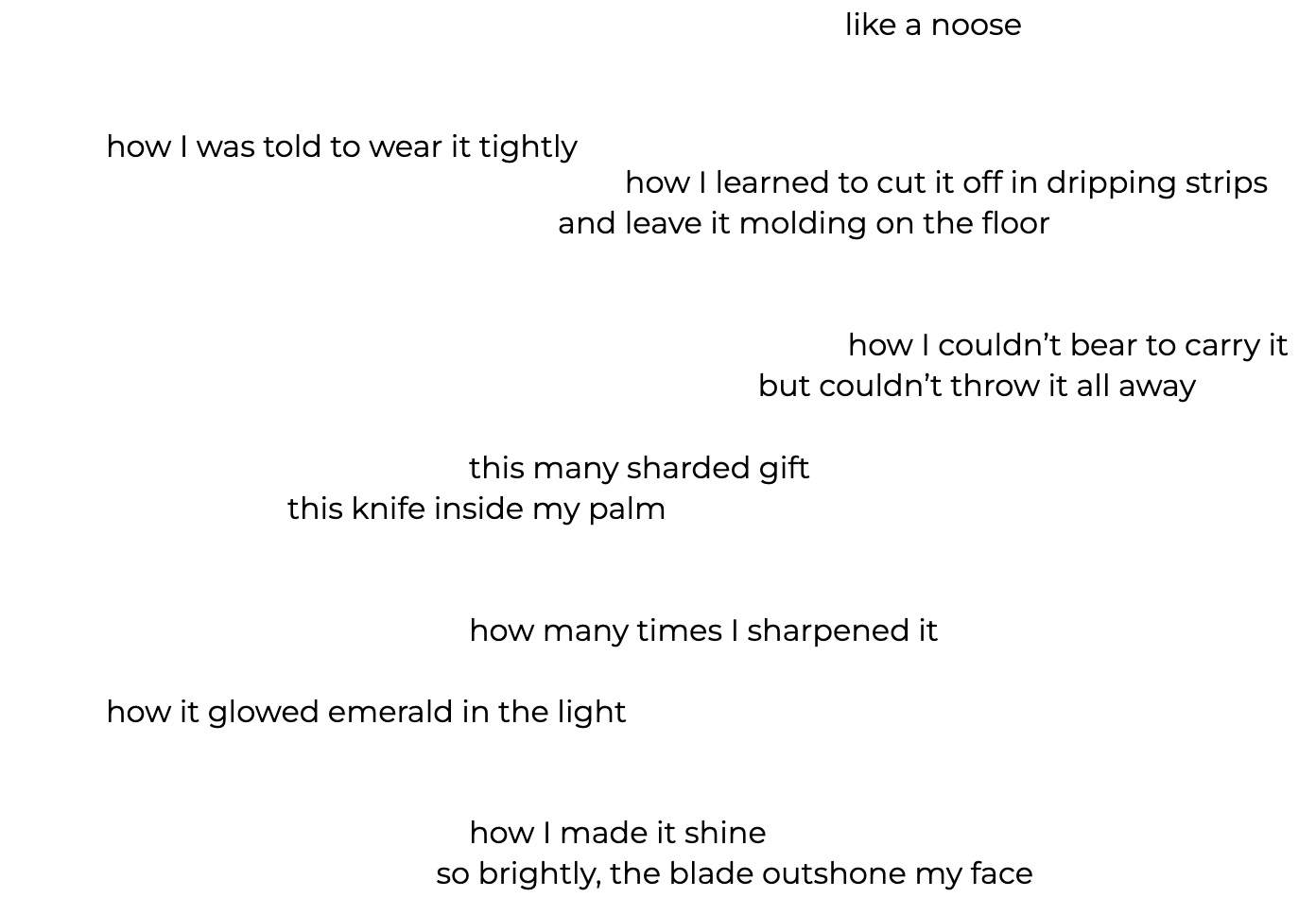
Lydia Kim

Hollow Girls Learn to Smash

     Sister Ann kept three of us after school.

     She passed out crowbars to the three of us, quiet girls, said that in exchange for our labor, our lunches will be free for one week and I’m hot, she’s noticed that food will move me. But also, she said, this is an honor, not a punishment, that’s why you three have been chosen.

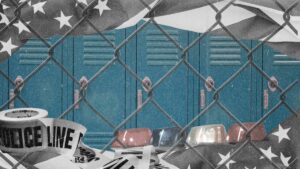
     We broke down the glass sitting in barrels outside the convent. She didn’t give us goggles but we knew to keep our mouths shut, we smashed bottles into shards, the pistons of our arms worked, pump, smash, pump, smash, girls as machines, smashing green necks and amber punts into shards and gristle so the sisters can get more bang for their buck at the recycling center. We glanced at each other but we did not confer, we did not stop, our noses ran at the smell of old wine, dried beer, ruined fruit, marinara, olives, thousand island dressing. A piece of glass pierced my palm and I shook it loose, wiped the blood on my skirt, kept going, up down pump smash. My arms filled with tired blood, grew heavy and thick, my eyes went white behind the lids.

How much did lunch cost for three hollow girls?

How much glass had I swallowed, would it travel from my throat to my stomach, would it grind itself into the tubes of my body, collect in the folds and hairpin turns, dam me, damn me, would I turn yellow then blue from the poisons unable to leak in their usual way from my skin, my throat, my crotch?

How did I get here, why was no one coming to check on us.

I let go of my percussive flesh, pulled the other two girls with me, we were light, just bones and sacs, we rose. Look, I said, they told us to break the glass then surrounded us with glass. I pointed. The windshield of the convent’s Ford Tempo, the door to the rectory, the stained-glass windows, the Stations of the Cross where Jesus falls a second time, a third time, father, why have you forsaken me.

They said to smash!

We swing high and swing low, we dance to the starlight sound of breaking glass, we are light, alight, we are doing what we’re told to do, three girls learning how to land a blow.

Later, sitting for a haircut, a shard comes out of my scalp.

Sister Ann told us to do it, I told my mother.

Do what. She doesn’t understand, she cannot imagine. Something like
this, in America.

She is torn, holding a shard and two conflicting impulses at once: she is
impressed and disgusted by my bovine obedience.


Lydia Kim is a writer based in the Bay Area. Her writing has appeared in Catapult, poeisis, Ursa Minor, Reflex Fiction, and Longleaf Review and in the anthologies And If That Mockingbird Don’t Sing, Lunchbox Moments, and Non-White and Woman. Her work has been supported by Tin House and Rooted and Written and she is the recipient of the 2023 de Groot Foundation grant and the 2022 SF Fdn/Nomadic Press Fiction Award. She’s absolutely thrilled to have work appearing at Hellebore.
#main

Emma Burnett

Therapy: Space

When there are only three people in front of me in the queue, I climb into my spacesuit. It is lightweight, made for short excursions or sitting in the rovers, not long days out on the drills.

The woman behind me double checks the fastenings, just like I did for the person in the line in front of me. Common courtesy. I nod my thanks.

The queue inches forward. No one talks. No one makes eye contact. Just a quiet shuffle towards the hatch.

I start fiddling on my pad. Work is coming in. Messages need answering. Emergency at home. Did I remember to prepare lunch for the kids because they’ll be going out on that learning spacewalk and they need to bring food with them, and he can’t do it because reasons.

The woman behind me taps my shoulder and I glance up from my pad. My turn.

I lower my visor, and there’s a quiet hiss as it seals shut. Then I climb through the hatch into the isolation room, scan my wrist near the door, and step into the airlock. The machinery cycles, and a cool voice reminds me to tether. I agree, then turn off my radio.

The door slides open, and everything is silent. I don’t look left or right. I try not to glance over at the other people umbilically attached to the tiny mining asteroid. They have their own reasons for being out here. I attach the magnetic end of my tether to the outside of the home hub, and climb up until there is darkness at the edges of my vision.

I stare out into the void. Dark and stars and a bajillion miles away a sun that doesn’t look much bigger than the stars.

I take a deep breath.

Then I scream, and I scream, and I scream.


Emma Burnett is a researcher and writer. She has had stories in MetaStellar, Elegant Literature, The Stygian Lepus, Roi Fainéant, The Sunlight Press, Fairfield Scribes, Five Minute Lit, Microfiction Monday, and Rejection Letters. You can find her @slashnburnett, @slashnburnett.bsky.social, or emmaburnett.uk.

#main

Maegan Melissa

Until I Burn

The sun ruled over my state like a tyrant, and we learned to be wary of its quiet power as it hung in the sky. At the end of every school year, my teachers would give us the same annual speech: 

“Go out into the world and grow into the people you want to be. Have a good summer—oh, and remember to drink plenty of water and don’t stay outside for too long.” 

But I never minded it. I liked the heat. I spent my lazy summer days in my backyard, searching tree trunks for cicada shells and making houses for ladybugs out of twigs and rocks. I ran barefoot on the hot pavement before leaping onto freshly watered lawns. On the hottest days, I stuck my feet in the pool while my dog sat next to me on the first step to cool off,  as we enjoyed the harsh tingle of the summer heat on our faces. The sun and the heat lived alongside me like a cousin down the road, so I never felt the need to be afraid. 

Others weren’t so lucky. The palest people were marked with vermillion patches on their shoulders and rose halos across their noses in August. By comparison, I was among the sun’s most loyal devotees; my skin was kissed by it in the spring and summer, and I yearned for its glow in the winter. I spent whole afternoons outside without sunscreen but never had a sunburn except for one time while on vacation. We were at the beach on an unassuming overcast day, and the sun managed to pierce through the layers of sunscreen my mom slathered on me. My skin was pained with an unfamiliar ache for days, but I didn’t change my habits for years after that incident. It was just a fluke. 

As I got older, I spent less time outside. I traded my backyard adventures for dance classes, video games, and the mall. So, I didn’t start to notice how I changed until I was a junior in high school. 

One day, early in my summer vacation, I started noticing how hot it was. Then I looked down. Red blotches swirled over my legs like searing lace, which had never happened before. I ignored it. Despite the slight burn, I thought it was another fluke. So, I tried to enjoy the sun like I did in the past, but the same red flare bloomed all over my limbs every single time. People even started pointing it out and would suggest we go inside for my sake. Eventually, I had to admit that I was no longer heat resistant, a quality I bragged about for years. But I wasn’t the only one changing. Every breeze scorched like fire. The green street signs sweated off their white letters. Mailboxes genuflected. Recycling bins hemorrhaged and concaved. Daylight stole everything’s color.

After spending my childhood basking in the sun’s warmth, I craved cloudy and rainy days. I don’t recognize the sun anymore. Every summer, my dad said that we never had to worry about the sun. He would put his dark finger on my arm and say that our melanin would always protect us from its harmful rays and soak up the good ones. His voice was almost cocky when he said the word “melanin,” like we were bound to thrive during even the most blistering days. 

Now, I’m not so sure.


Maegan Melissa (she/her) was born in Phoenix and currently resides in Las Vegas after spending half a decade in Southern California. After many speed bumps, she recently completed her Bachelor’s in English at UCLA. Through the encouragement of former teachers, professors, and her mother, she reignited her long-dormant passion for writing. She is featured in Spotlight Poetry Magazine’s Young, Gifted, & Black Anthology Vol. 2.

#main

Allyson Noman

Quitting Again

You admire the friends you’ve made from late nights smoking cigarettes: the lavender bed that
shudders when the water pipes shake, the lightning-eyed possums who stare, daring you to
approach them. The man with the shotgun at 3am. When I ask if you miss them, you answer, Yes.
As though your oldest companion has married and moved to Boracay.

And what do you miss the most? Well, there’s your typical shooting stars… you reply,
nonchalant.

You’ve seen so many. Somehow, I always miss them.


Allyson Noman (she/her) is a first-generation Pakistani-Korean writer and multimedia creator, with ties to New York City, Miami Beach, and much of California. Her work explores identity, love, and addiction. Visit her at www.allysonnoman.com for more.

#main

Claire Pinkston

little blk lesbian waits at the end of the world

(after Ocean Vuong)

in the thin, watery mouth
of June, i took apart my hands & waited
for the end of the world.
the newspaper said it was so, or
maybe it was the census bureau,
or maybe my own body, poised & ossified
in nature morte. brown on black.
i unsheathed my scissors & began
cutting out a sleeve
of sky to hold me when it came.
my mother began mourning me
when i was twelve years old,
& not much mattered after.
my body is a burial ground,
i said, & the words felt real enough
to be mine.
around me, life continued
to unfurl, night-tipped crocuses
leaning to expose
their soft yellow underbelly.
& when i finally looked up
i felt my body
heave its sentence in forgiveness.
the end of the world is just
the end of the world, it said
i stared it down, my trembling life,
& i stepped up to face it,
eye & storm & girl
& free.


Claire Pinkston is a biracial Black youth poet and writer attending Yale University. Her work has previously been recognized by the Alliance of Young Artists and Writers and the University of Louisville and is published or forthcoming in diode poetry, peach mgzn, and The Offing, among others. She is growing with her poetry.

#main

Agboola Tariq Adebola

Portrait of A Boy in Love With Things Broken

i find myself shattered flattered in front of a
mirror. every fragment of me phasing into
complexities– like an hourglass, broken, splintered
into shrapnels, into a substance so minute it defies
nomenclature. resists existence. escapes time.

i think myself a character; eyes, the milky way of
galaxies colliding, causing luminous beams that
breach anything unhurt. my heart, a darkness
only found in space, a vault of wrecked
[space/relation] _____ships.

i remember myself a child in my kindergarten
years. i remember the singing teddy bear & how i
found satisfaction in broken toys/ how beauty subsists in
things broken.

i build this poem with lines broken, disjuncted
into meanings. like a brick house collapsing into
the atmosphere of the earth, my body disintegrated by
burdens that draw down the edges of my being.

in brief moments i find peace in the nature of
things. the way the earth breaks to birth trees, how
a fruit breaks away from roots that bore it, how it
falls back into the deep of the earth to harvest growth.

what consists of being, if not an entirety of follicles
broken into existence?/ so i begin to breed pieces of myself & i
whisper into the spaces of a broken mirror—‘all that breaks is not chaos’.


Agboola Tariq Adebola is an unfolding poet from Western Nigeria & a student of law in the University of Ibadan. He explores in his writings, self/ identity, vivid imaginations etc.He tweets: @Agboola_Tariq_A

#main

Maria Cohut

Hunger


Maria Cohut (she/her) is a Brighton-based poet of Romanian origin. Her work largely grapples with themes of identity, migration, and alienation, with poetry appearing online and in print in the Haiku Journal, The Found Poetry Review, Eunoia Review, Doll Hospital Journal, and Cephalopress, among others. Her first poetry pamphlet, Spatter Pattern (back room poetry, 2023), addresses the issue of gender violence by reimagining detective fiction tropes. She occasionally blogs at Encyclopaedia Vanitatum, and can be found on Twitter (still) @mariascohut, and on Instagram @mariac_phd.

#main

SG Huerta

I Love Everything Inside This Mug of Coffee

for Miles, & after Chen Chen and Jane Wong

like the way you make it
so sweet I have no choice

but to drink it slowly, slowly,
& admire the fire of us two years in.

Nearly two years since I stopped
using cheap beer as a replacement

for psychiatry. I know sipping café
this slowly is bad for teeth but

I just want to enjoy this Modern
Baseball vinyl with you before

I have to work, want to stay
on the couch & forget Texas

wants us dead. I love us
in all our transness & queerness

& weirdness. I like to think
most Texans love us in all our

transness queerness weirdness.
Texans who know that it was

not Texas before imperialism.
This cafecito is less fuerte than

Welita makes it and I don’t know
what my ancestors drank or spoke

antes de español. Sometimes
when I write poems, I see

genderless ancestors doing the same

before pen and paper. Before colonizers.

Before broken treaties. Before shame.
Before this cup of coffee.


SG Huerta (they/he) is a queer Xicanx writer from Dallas. They are the author of the chapbooks The Things We Bring with Us (Headmistress Press) and Last Stop (Defunkt Magazine). Their work has appeared or is forthcoming in The Offing, Split Lip Magazine, Infrarrealista Review, and elsewhere. They live in Texas with their partner and two cats. Find them at sghuertawriting.com or on Twitter @sg_poetry.

#main

Junaid Ahmed Ahangar

Was

Old people die young
Young people die proud
Sailors die in a brave new world
Children die happy
Women die sad
Men die alone
Soldiers die in a song
Orphans die chasing a dream
Mothers die in worry
Fathers die in peace
Sons die in regret
Daughters die in fear
Poets die lamenting
Lovers die with their eyes wide open
Prophets die in sorrow
Husbands die in arrival
Wives die waiting for
Fugitives die in a cold embrace
Brothers die in arms
Sisters die in protest
And the world keeps spinning
One day at a time
And the last words spoken are,
I lived
And I wanted to.


The poet, Junaid Ahmed Ahangar works as a doctor in a tertiary care institute in Srinagar, Kashmir which has been a conflict zone for the most part of the last century continuing on to this day. He graduated from Dhaka, Bangladesh and completed his MD in Medicine from Srinagar, Kashmir. He also has an MA in English Literature from India and is currently in the second year of MA in Philosophy. He devotes his time between his profession and passions which over the last few years has seen a conscious departure towards writing poetry and prose. He is also a songwriter and occasional guitarist with other interests apart from literary pursuits like music, film-making and theology.

#main

Haley Bossé

I confess, I only wanted to be a girl

Content Warning: Suicidal Ideation


Haley Bossé is a queer, non-binary educator who emerged from the dripping lichen of the PNW. Some of their poems have found homes in Delicate Friend, Bullshit Lit’s Horns Imprint, and Blue Daisies Journal, while others continue to haunt the countryside. Haley is a reader for Kitchen Table Quarterly and an editor of the new Trans Issues Zine (@trans_issues on twitter). Find Haley on twitter @TalkingHyphae.

#main